

 Starting June 1, the Fed began reducing its balance sheet holdings of U.S. Treasuries by $30 billion a month for three months. Thereafter, it will double its reduction of U.S. Treasuries by $60 billion per month beginning in the fourth month. For its mortgage-backed securities, the first three months will see $17.5 billion roll off its balance sheet. Starting in the fourth month of the program, this cap will increase to $35 billion per month. As its dual mandate is to both maintain employment and a stable rate of inflation, this is another way the Fed is implementing its monetary policy to put the brakes on inflation and reign in out-of-control demand with limited supply. How will the Fed’s unwinding of its balance sheet impact markets for the rest of 2022?
Instead of quantitative easing (QE), where the Fed bought U.S. Treasuries and mortgage-backed securities to foster more demand for U.S. Treasuries and lower bond yields, QT is the opposite. According to the Federal Reserve Bank of St. Louis, quantitative tightening (QT) is the reverse type of policy that aims to unwind holdings on the Fed’s balance sheet. To tame inflation, QT removes liquidity from economic institutions and raises rates for long-dated assets.
In response to the COVID-19 pandemic, the Fed bought U.S. Treasury securities and agency mortgage-back securities (MBS) again in March 2020 to provide stability by maintaining a source of easily accessible credit for consumers and business owners. The Fed bought $80 billion of Treasury securities and $40 billion of MBS per month. The Fed’s balance sheet grew from $3.9 trillion (March 2020) to $8.5 trillion (May 2022). Looking at it from a percentage of GDP, it increased from 18 percent to 35 percent. When QT is in full force, it is expected to lower the Fed’s balance sheet by at least $1.1 trillion annualized. Over a three-year timeframe, it is expected to remove about $3 trillion over 36 months.
When it comes to the process of QT, it is important to understand how it works and impacts the overall market dynamics. When U.S. Treasuries and mortgage-backed securities mature, the respective issuing agency pays them off and the Fed receives payment. Unlike QE where the proceeds were reinvested, the proceeds will not be reinvested during QT and the Fed’s balance sheet will fall in size.
When it comes to global central banks implementing their own versions of QT, it is estimated that as much as $2 trillion will be removed from markets over the next 12 months. Looking at the Fed alone, it is aiming to reduce $1 trillion or 11 percent of its holdings from the balance sheet over the next year. If QT continues through 2024, its holdings will drop from 37 percent of GDP to 20 percent. With the Fed’s balance sheet containing almost $9 trillion and inflation being 8.5 percent of the current CPI reading, this pace is higher because the last time it conducted QT, the Fed’s balance sheet held $4.5 trillion in assets with a CPI of 2.75 percent.
Looking at potential scenarios of QT outcomes, the Fed has published three respective impacts on the Fed’s policy rate. The Baseline scenario, or following what began on June 1, would lead to what’s effectively a policy rate increase of 56 basis points. This is compared to a “no-runoff scenario,” leaving the Fed’s balance sheet with another $2.1 trillion in Q3 of 2024, whereby there is no QT in place. Looking at the full-runoff scenario, it would let $0.8 trillion roll off the Fed’s balance sheet by Q3 of 2024, necessitating a nine-basis point drop in the policy rate to offset the balance sheet’s negative impact on the macroeconomy.
When the pandemic struck in March 2020, the Fed Funds rate was cut to between 0 percent and 0.25 percent. On Jan 26, 2022, the FOMC maintained its target range for the federal funds rate at 0 percent to 0.25 percent. Fast forward to June 15, 2022: The FOMC raised its target range for the federal funds rate to between 1.5 percent and 1.75 percent. Depending on the evolving economic data surrounding inflation, the Fed appears willing to further adjust its target range. It is important to explore how the federal funds rate has led the market to interpret asset purchasing or unwinding actions by the Fed.
During 2017 and 2018, the FOMC increased the federal funds rate by 175 basis points, bringing it to approximately 2.25 percent. St. Louis Fed President Jim Bullard argued that once the federal funds rate is north of zero, be it QE or QT, how the balance sheet grows or shrinks has little say on how the Fed will steer its monetary policy.
While the economy is in uncharted territory due to its emergence from the COVID-19 pandemic and evolving monetary policy, only time will tell how much of an effect QT will have on the U.S. and global markets.
 With the S&P down nearly 20 percent and the Nasdaq index down nearly 4,000 points since the beginning of 2022, one could say the indices are in a bear market. While we can’t predict the future, economic indicators can offer some insight into the likelihood of the market’s future performance.
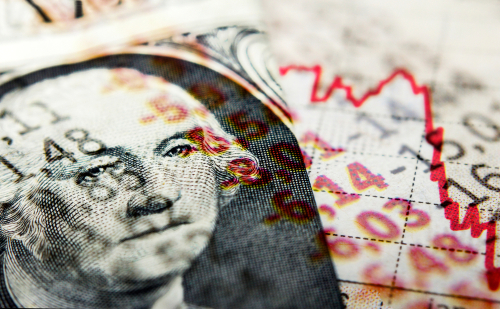 The Bureau of Labor Statistic’s Consumer Price Index rose by 8.5 percent year-over-year ending March 2022, leading most economists to agree that inflation is going to be with us for a while. With inflation seeming not to abate, at least in the near term, how will different types of investments react to inflation that is sustained and unknown when it will peak and begin to drop. Looking at a 2004 study from the Federal Reserve, an unexpected 25-basis point rate cut can be expected to see equities appreciate by one percent.
 According to the March 2022 Short-Term Energy Outlook (STEO) from the U.S. Energy Information Administration (EIA), the forecast is for high energy prices in 2022. The report found that Brent crude oil, used as a benchmark ex-U.S., is expected to see prices of $116 per barrel in Q2 of 2022. West Texas Intermediate (WTI), the price the U.S. uses as a benchmark, is expected to cost consumers, on average, $4.10 a gallon in Q2 of 2022.
 There’s much uncertainty surrounding if, how and when the Federal Reserve will raise its rates, end its bond and mortgage-backed security purchases, and wind down its balance sheet. For the March 16 Fed Meeting, the CME FedWatch Tool has a 47.9 percent probability of a 25 to 50 basis point increase, and a 52.1 percent probability of a 50 to 75 basis point increase for their Target Rate. There are many expectations for the Fed to raise its Federal Funds rate, or the so-called overnight lending interbank rate. However, there’s a lot of uncertainty as to how many times the FOMC will increase it.
 According to the World Bank, there’s a mixed picture for commodities in 2022.
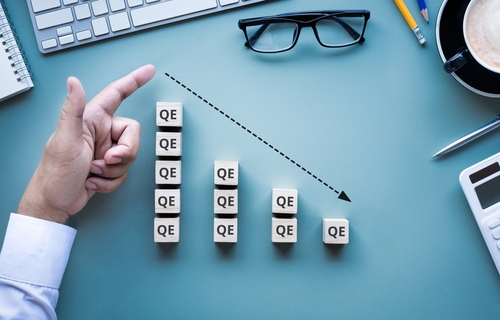 According to a Dec. 15 Federal Open Market Committee (FOMC) statement from the Federal Reserve, the federal funds target range will remain at 0 percent to 0.25 percent. Beginning in January, the FOMC will reduce its monthly purchase of assets to $40 billion in Treasury securities and $20 billion in mortgage-backed securities, with tapering expected to finish well before mid-2022. The FOMC also projects three rate hikes in 2022. These monetary policy adjustments are all subject to change based on the economic developments going forward, signifying uncertainty for markets in 2022.
 As the Board of Governors of the Federal Reserve System points out, Jerome Powell was appointed to a four-year term on Feb. 5, 2018. With the Fed Chair’s term expiring in February 2022, there has been much uncertainty as to whether he would be reappointed or replaced.
 Energy is expected to increase in price as 2021 closes and 2022 begins, according to the Oct. 13, 2021 Short-Term Energy Outlook (STEO) from the U.S. Energy Information Administration (EIA).
 According to the Sept. 8, 2021, release of the Federal Reserve’s Beige Book, the U.S. economy is facing many headwinds.