
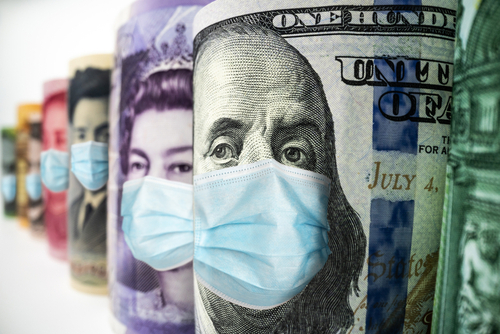
 As Johns Hopkins University of Medicine’s Coronavirus Resource Center revealed a recent increase of coronavirus cases in the Southern and Southwestern United States, the VIX ticked up. With fears of the outbreak curve not flattening, how will this impact markets?
The Volatility Index (VIX) was established by the Chicago Board Options Exchange in 1993 to gauge volatility in the financial markets. Referred to colloquially as the “fear index”, it measures the next 30 days of anticipated volatility for the U.S. Stock Market via S&P 500 options. For reference, during the peak of the 2008 financial crisis, it topped out at 89.53. During periods of relative calm, it’s not unheard of to trade below 10. On March 16 of this year, the VIX reached 82, thus demonstrating how volatile investors expected markets to be due to the uncertainty of the coronavirus.
On February 12, 2020, the Dow reached 29,551.42 and the S&P 500 rose to 3,379.45. But by the end of February, these major indices experienced their greatest fall since 2008, ushering in a market correction.
Coronavirus and its Impact on the Markets
Starting in early March, the COVID-19 pandemic began taking a negative toll on stock markets worldwide, the worst since 2008. On March 9, the Dow fell 2,158 points, or 8.2 percent, during the day’s lows. Other major U.S. markets were not spared – the S&P 500 fell 7.6 percent and the Nasdaq dropped 7.3 percent.
On March 12, the U.S. stock indices dropped more. The S&P 500 fell another 9.5 percent, along with the Dow falling 2,353 points, almost 10 percent lower. For the Dow, it was the worse one-day performance since Oct. 19, 1987’s drop, bringing it back to 2017 levels. While there was hope of a sustained rally beginning on March 13, it was dashed when the Dow Jones fell nearly 13 percent or 2,997.10 points, and the S&P 500 dropped nearly 12 percent on March 16.
Factors Contributing to the Crash
While the stock market crash in 2020 was directly attributable to the coronavirus outbreak worldwide, many experts, including the International Monetary Fund (IMF), view the coronavirus as speeding up a global slowdown that was already in the works.
Despite the St. Louis Fed’s data that showed the United States had an unemployment rate of 3.6 percent in late 2019, the nation’s industrial output peaked in 2017, and experts noticed a declining trend at the start of 2018. The IMF also believed the United States-China trade war made global growth more challenging going forward.
There were other concerning factors about economic growth domestically and internationally, causing fear a worldwide recession was beginning. March 2019 saw the U.S. yield curve inverting – which means longer-term debts yield less than shorter-term debts. The ISM Manufacturing Index fell below 50 percent in August 2019, dropping to 48.3 percent in October 2019, and remaining below 50 percent through 2019.
When it comes to rising COVID-19 cases, the state of California saw 4,515 new cases over 24 hours, as reported on June 21. Florida’s reports on June 20 and 21 saw the number of cases increase by 4,049 and 3,494, respectively. Other Southern and Western states, such as Nevada, Missouri, and Utah, reported one-day records in increases of coronavirus cases as well.
With Georgia, Alabama, Florida, and California, among others, showing concerning trends for increased coronavirus infection rates, analysts at Deutsche Bank expressed concern about how the virus may keep spreading. According to the same research, there’s some trepidation on how it may negatively impact economic growth. Depending on the overall hospital capacity to handle a resurgence in severe COVID-19 cases, how well the medical infrastructure responds will influence how the economy functions going forward.
With the number of increasing cases shifting from the Northeast to Southern and Western states, it’s feared that there will be another panic on Wall Street as reopening the economy is postponed, further stunting economic activity.
Research from Jefferies Financial Group found that even though coronavirus cases are increasing, it’s not the only or the biggest worry. Jefferies’ research found that for investors, the biggest concern is how well and how fast the economy bounces back.
Analysts believe that there needs to be more than just action by The Federal Reserve to inspire market confidence. The research found four main concerns, which included the effects of COVID-19:
- 6.6 percent of respondents said the upcoming election is the most important factor
- 12.1 percent of respondents said a second wave of COVID-19 is the most important factor
- 31.1 percent of respondents said The Federal Reserve’s decision is the most important factor
- 50.2 percent of respondents said the shape of the recovery is the most important factor
As the economy reopens and medical experts become more knowledgeable and better prepared to deal with COVID-19 through therapies and equipment for hospitalizations, it seems that investors will be taking a more holistic investing approach.
 According to the futures market, Chicago Mercantile Exchange contracts are forecasting a drop of 27 percent in dividends over 24 months for the S&P 500 index. Dividends are projected to fall to $42.05 in 2021, a drop from 2020’s dividend of $47.55 and 2019’s high of $58.24. Looking forward to 2026, according to CME’s futures contract, the dividend is expected to recover to $56.65. While the latter years are not as likely as what’s up next, it’s worth taking note.
 With the CARES Act (Coronavirus Aid, Relief and Economic Security) signed into law by President Trump on March 27, this set into motion major initiatives by the U.S. government in response to the coronavirus’ economic impact. This Act provides $2 trillion in financial aid to the nation, in big part to soften the impact of the coronavirus’ hit to the country’s unemployment numbers.
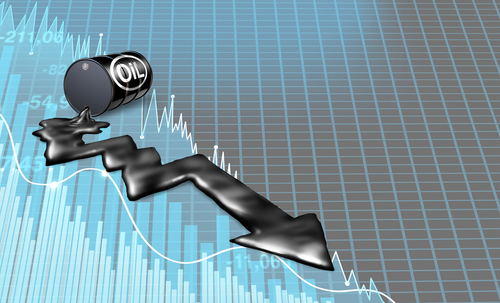 Over the past six years, domestic crude oil has experienced a volatile ride. 2014 saw the emergence of American shale as producers were attracted to the $114 price levels. However, in 2016 the price for a barrel eventually fell to $27 as a global supply glut developed. 2016 also saw Russia and Saudi Arabia form an oil pact that drew together Russia and OPEC, leading to the so-called OPEC+ to navigate the global oil market. This agreement would eventually culminate into the current crude oil tensions that exist between Saudi Arabia and Russia.
 According to the World Economic Forum (WEF), the spread of the coronavirus will impact the world’s economy. Whether it’s a Reuter’s poll from economic experts projecting growth in China slowing to 4.5 percent in Q1 of 2020, in contrast to China’s Q4 GDP of 6 percent; or the International Energy Agency (IEA) saying world desire for oil will be lower due to the coronavirus; or global companies reducing or temporarily closing their Chinese factories, change is on its way. Based on this data, what does the global economic outlook entail?
 According to a Jan. 16 press release from the U.S. Department of the Treasury, within the first six months of 2020, the federal department will begin issuing a 20-year Treasury bond. This is the U.S. government’s attempt to maintain and support the federal government’s ability to borrow into the future. This action will also have an impact on the markets going forward, especially when it comes to the Federal Reserve and its monetary policy.
  When it comes to 2020 and energy prices, the world’s energy market will face many known and unknown variables. How and what types of events that will ultimately play out are unknown but, according to industry and government experts, there are some variables that are projected to lead to lower global prices overall.
 The so-called phase one of a trade deal with China is expected to contain a provision for $40 billion to $50 billion in purchases of American agricultural products by China, according to an October news release from U.S. Sen. John Hoeven (D-ND) With ongoing discussions surrounding the US-Sino trade talks, there are rumors for such a partial trade deal. But how has the recent past impacted both countries’ economies and a mutual desire for better trade deals?
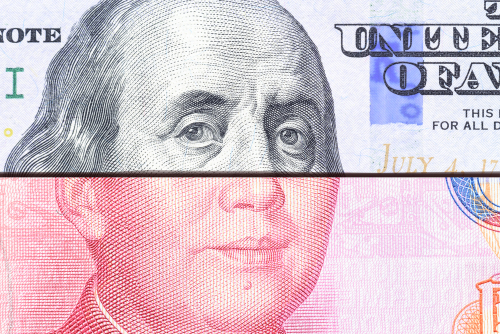 According to the U.S. Department of Commerce and the U.S. Census Bureau, retail sales came in at a negative 0.3 percent for September, even though it’s still 4.1 percent more than September 2018’s report. The same report followed up on August 2019’s numbers, with a revision by the agency to 0.6 percent, up from 0.4 percent. With the ongoing U.S.-China trade war and tariff uncertainty, how will consumer spending be impacted?