

The economic indicator known as Gross Domestic Product (GDP) represents the dollar value of all purchased goods and services over the course of one year. It is comprised of purchases from all private and public consumption, including for profit, nonprofit and government sectors.
There are four components that are added to calculate the GDP:
- Consumer spending
- Government spending
- Investment spending (this includes business, inventory, residential construction and public investment), Net exports, meaning the value of goods exported minus the value of goods imported
The government calculates and publishes the GDP rate on a quarterly basis and for the entire year.
What Affects GDP?
There are different ways GDP is measured. For example, nominal GDP refers to a straight calculation of raw data, while real GDP adjusts the calculation to include the impact of inflation.
When inflation increases, the GDP tends to rise; when prices drop, so does the GDP. Be aware that this adjustment can happen even when there is no change in the quantity of goods and services produced in the United States during that time frame.
A key component of the GDP calculation is net exports. This number rises when the country sells more goods and services to foreign countries than it buys from them. A trade surplus means the United States sells more than it purchases, which is a strong contributor to GDP. When the United States buys more foreign goods than it sells, this creates a trade deficit, which is a negative weight in the GDP calculation.
GDP also reflects demand. The dollar output of certain sectors and industries rises and falls based on the popularity of their products and services. For example, when a new product is well received, then those sales increase that sector’s contribution to the GDP. This is a helpful measure because it enables companies to make better research and development decisions based on recent success. The same is true when a new product, or even an upgrade to a new product, does not increase sales.
What Does GDP Indicate?
The GDP is the most common, broad-based measure used to monitor the country’s economic progress. When it is on the rise, the economy is considered to be growing. When the GDP rate drops – even if it remains in positive territory – the economy is viewed as contracting. If it continues to slip quarter after quarter, it is an indicator that the economy might be in trouble and the Federal Reserve or Congress could consider altering monetary (interest rates) or fiscal (taxes and government spending) policy to inject cash into the nation’s financial system.
Technically, economists define a recession as a prolonged period of economic decline, often precipitated by two consecutive quarters of negative GDP growth.
This economic yardstick also is used to indicate a country’s general standard of living. The better a country is able to produce the goods and services that its residents and businesses use, the more that capital is infused back into the country. Therefore, higher GDP levels indicate a more prosperous country and relatively higher standard of living among its residents.
The GDP doesn’t just gauge domestic economic health, it serves as a comparison measure to other countries. This is particularly important during periods of growth and decline, when the United States can track how well it is responding to global economic factors relative to other countries.
Current Trendline
According to the Bureau of Economic Analysis, first quarter real GDP closed at 3.1 percent. In the second quarter, real GDP fell to 2.0 percent. The advanced assessment for the third quarter of 2019 is 1.9 percent.
 The so-called phase one of a trade deal with China is expected to contain a provision for $40 billion to $50 billion in purchases of American agricultural products by China, according to an October news release from U.S. Sen. John Hoeven (D-ND) With ongoing discussions surrounding the US-Sino trade talks, there are rumors for such a partial trade deal. But how has the recent past impacted both countries’ economies and a mutual desire for better trade deals?
 When it comes to determining depreciation for Furniture, Fixtures and Equipment (FF&E), there are many considerations that exist for accountants and business owners.
 The markets are hitting all-time highs, so if you are thinking of selling stocks now or in the near future, there is a good chance that you will have capital gains on the sale. If you’ve held the stocks for more than a year, then they will qualify for the more favorable long-term capital gains tax (instead of being taxed at ordinary income rates for short-term sales). But the total tax due can still be enough to warrant some tax planning. Luckily, the tax laws provide for several ways to defer or even completely avoid paying taxes on your securities sales.
 Terrorist and Foreign Fighter Travel Exercise Act of 2019 (HR 1590) – This bill promotes the identification and determent of terrorist activity from reaching the homeland, and enhances the United States government’s ability to respond to terrorism, including emerging threats. Specifically, the legislation requires the Department of Homeland Security to develop and conduct exercises related to foreign terrorism, including the National Incident Management System, National Response Plan, and other related plans and strategies. The legislation was introduced on March 7 by Rep. Michael Guest (R-MS). The president signed the bill into law on Oct. 9.
 According to a report by the Financial Crimes Enforcement Network (FinCEN) released in July, financial institutions have incurred more than $9 billion in losses due to Business Email Compromise (BEC) schemes since 2016. With such staggering losses, businesses and even individuals can’t afford to ignore BEC attacks.
 Believe it or not, the holidays are right around the corner. And try as you might, overspending is real – whether you plan ahead or wait until the last minute. With this in mind, here are a few ways to get a handle on spending and save money on gifting.
 Economists generally determine that the country has fallen into a recession after two consecutive quarters of negative gross domestic product (GDP) growth. Since 1967, the United States has experienced seven recessions.
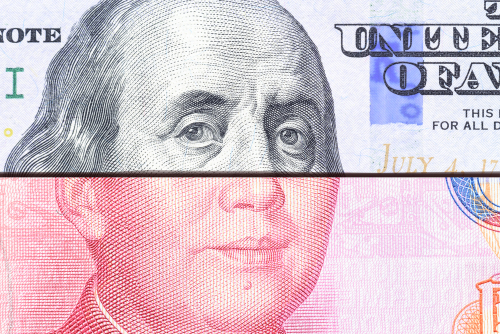 According to the U.S. Department of Commerce and the U.S. Census Bureau, retail sales came in at a negative 0.3 percent for September, even though it’s still 4.1 percent more than September 2018’s report. The same report followed up on August 2019’s numbers, with a revision by the agency to 0.6 percent, up from 0.4 percent. With the ongoing U.S.-China trade war and tariff uncertainty, how will consumer spending be impacted?
 As the name implies, First-In, First-Out (FIFO) is a way for companies to value their inventory. The first items put into inventory or produced by the company are accordingly the first taken out of inventory or transferred to customers and therefore expensed. When it comes to accounting for acquisition and/or production costs, initial and earlier costs are the first to be expensed, with more recent costs staying on the balance sheet to be expensed later.