
 National POW/MIA Flag Act (S 693) – This bill amended title 36 of the United States Code to require that the POW/MIA flag be displayed on all days that the flag of the United States is displayed on certain federal properties. Previously, the POW/MIA flag was displayed only on Armed Forces Day, Memorial Day, Flag Day, Independence Day, National POW/MIA Recognition Day and Veterans Day. The legislation was introduced by Sen. Elizbeth Warren (D-MA) on March 7. It was passed in the Senate on May 2, passed in the House on Oct. 22 and signed into law by the president on Nov. 7.
Hidden Figures Congressional Gold Medal Act (HR 1396) – This legislation awards Congressional Gold Medals to Katherine Johnson and Dr. Christine Darden, and posthumously to Dorothy Vaughan and Mary Jackson, as well as all of the women who contributed to the success of the National Aeronautics and Space Administration during the Space Race. The legislation was sponsored by Rep. Eddie Johnson (D-TX). It was introduced on Feb. 27, passed in the House on Sept. 19, in the Senate on Oct. 17 and then signed into law by the president on Nov. 8.
Rebuilding Small Businesses After Disasters Act (S 862) – Introduced on March 25 by Sen. John Kennedy (R-LA), this bill makes permanent the increased collateral requirements for major-disaster loans issued by the Small Business Administration. It passed the Senate on Aug. 1, the House on Nov. 20, and is currently awaiting signature by the president to enact into law.
Hong Kong Human Rights and Democracy Act of 2019 (S 1838) – In response to the millions of Hong Kong citizens who have protested and demonstrated for government reform since last June, this bill authorizes three actions. 1) Requires the State Department to recertify Hong Kong’s autonomous status each year in order to continue receiving special treatment by the United States; 2) mandates the U.S. government identify anyone involved in abductions or extraditions of Hong Kong protesters or citizens to mainland China, plus freezes any U.S.-based assets and denies them entry into the United States; and 3) clarifies under federal law that no one should be denied a visa to the United States on the basis of participating in Hong Kong protests. The bill was introduced on June 13 by Sen. Marco Rubio (R-FL) and passed both Houses of Congress in November. It is currently with the president, who may sign or veto the bill.
A bill to prohibit the commercial export of covered munitions items to the Hong Kong Police Force (S 2710) – This legislation prohibits the issuance of licenses to export certain munition items to the Hong Kong Police Force and the Hong Kong Auxiliary Police Force, such as tear gas, rubber bullets and handcuffs. The bill does allow for the president to make an exception upon certifying to Congress how such exports would be advantageous to U.S. national interests and foreign policy goals. This prohibition would expire one year after enactment. The bill was introduced on Oct. 24 by Sen. Jeff Merkley (D-OR) and passed in Congress on Nov. 20. It is currently awaiting signature by the president.
Preventing Animal Cruelty and Torture Act or the PACT Act (HR 724) – This bill expands criminal provisions with respect to animal crushing (torture by stepping on an animal). It subjects violators to criminal prosecution for intentionally crushing an animal, or knowingly creating or distributing an animal crush video using interstate commerce. Criminal penalties include a fine, a prison term of up to seven years, or both. The bill was introduced by Rep. Theodore Deutch (D-FL) on Jan. 23, passed the two Houses of Congress in October and November, and is currently awaiting to be signed into law.
 Terrorist and Foreign Fighter Travel Exercise Act of 2019 (HR 1590) – This bill promotes the identification and determent of terrorist activity from reaching the homeland, and enhances the United States government’s ability to respond to terrorism, including emerging threats. Specifically, the legislation requires the Department of Homeland Security to develop and conduct exercises related to foreign terrorism, including the National Incident Management System, National Response Plan, and other related plans and strategies. The legislation was introduced on March 7 by Rep. Michael Guest (R-MS). The president signed the bill into law on Oct. 9.
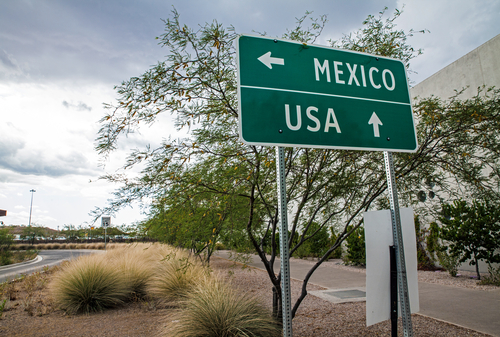 Emergency Supplemental Appropriations for Humanitarian Assistance and Security at the Southern Border Act, 2019 (HR 3401) – This legislation provides $4.5 billion in emergency supplemental appropriations to federal departments and agencies for humanitarian assistance and security to respond to migrants attempting to enter the United States at the southern border for the rest of the fiscal year. This funding is available for appropriations for U.S. Customs and Border Protection, U.S. Immigration and Customs Enforcement, the Federal Emergency Management Agency, and the Department of Health and Human Services for the Administration for Children and Families. The bill also includes requirements and restrictions for how the funds may be used. It was introduced on June 21 by Rep. Nita Lowey (D-NY) and was signed into law by the president on July 1.
 National Flood Insurance Program Extension Act of 2019 (S 1693) – This bill reauthorizes the National Flood Insurance Program, which was set to expire on May 31, through June 14. The bill was introduced by Sen. John Kennedy (R-LA) on May 23, passed the Senate and the House in one week and was signed into law by the president on May 31.
 Target Practice and Marksmanship Training Support Act (H.R. 1222 – The Pittman-Robertson Act, passed in 1937, imposes an excise tax on the sale of firearms, archery gear and ammunition. Those proceeds are used to fund hunter education programs, land acquisition and improvement of wildlife habitat. This new bill allocates a higher portion of these federal funds to cover the cost for construction and expansion of public target ranges. The act is designed to encourage states to develop additional shooting ranges for marksmanship training. It was introduced on Feb. 14 by Rep. Ron Kind (D-WI), passed in both the House and Senate and was signed into law by the president on May 10.