
 With COVID-19 still requiring remote working, companies that effectively on-board new workers retain their workers longer, have better worker performance and increase their profits by almost 100 percent, according to the U.S. Chamber of Commerce. However, there are many considerations that companies should take during this important process.
For remote orientations, a welcome package that discusses the company’s products or services can be emailed to attendees prior to the live introduction. It’s also imperative that essential employees for the new hires (training and supervisors, for example) and existing employees who they will be working with are on the virtual meeting for introductions.
Other considerations include maintaining a sense of professionalism. If a company has a dress code, training managers should serve as an example by dressing appropriately and communicating the requirement to new hires. This also can apply to the physical background of remote workers – having a professional-looking environment with muted colors.
Equip Workers With Varied Communication Tools
While almost everyone uses email to communicate, Harvard Business Review (HBR) suggests that email should not be the sole method of communication for remote workers. Along with team communication platforms, video conferencing benefits workers because communicating with body language helps normalize the remote work experience. Video conferencing with recording capabilities also can be used for online training so that employees may access this resource at their own convenience.
Managing Virtual Communication
Regardless of how virtual employees communicate, there needs to be some structure to find the right balance for efficiency. Examples could include using instant messages for urgent but simple communication needs. When it comes to video conferencing, consider touching base for 10 to 15 minutes once a day for a check-in or feedback session. Determining communication frequency depends on when workers work (different time zones, staggered shifts, etc.) and what’s effective for managers and employees.
Schedule a check-in phone call – either once a day or perhaps once in the morning and once in the late afternoon. It can be modified depending on the individual or the type of worker, be it a call with a single employee or an entire group if they are used to working together.
HBR says that workers are heavily influenced on how to deal with abrupt changes or crises based on their leaders’ actions. Whether a manager is calm and collected or anxious and not in control, those they are supervising will act similarly. Regardless of the situation, managers who empathize with feelings of uncertainty and give verbal encouragement will impart a sense of confidence to the entire team.
Regardless of how social a person is during office hours, the lack of morning greetings, break room conversations, water cooler chat and saying goodbye when leaving the office reinforces the isolation of working remotely – and that can affect anyone.
Therefore, weaving in time for employees to build rapport is also recommended by HBR. Whether it’s going around virtually to ask how everyone’s weekend was, or having the company deliver a meal to remote workers for a virtual office party, it’s been reported that these types of activities relieve feelings of isolation and garner goodwill with the company.
Businesses that take the appropriate steps to build and develop a balanced remote workforce can survive and thrive, but only by adapting to the very different demands of working virtually.
Sources
https://www.uschamber.com/co/run/human-resources/onboard-employees-during-covid-19
https://hbr.org/2020/03/a-guide-to-managing-your-newly-remote-workers
 The $1,200 stimulus check sent out to individuals had mixed impacts on our economy, based on academic research, including by the University of California-Davis. For recipients with $3,000 or more in their bank accounts, there was no positive impact on the economy. However, for recipients with bank account balances up to $500, they spent 44.5 percent of their check, on average, within 10 days of receiving the stimulus check.
 However, you might still be able to live out your golden years in your own home if you can afford to pay for in-home care. Each year, Genworth Financial publishes a
  We’re living in unprecedented, challenging times. If you’re feeling stressed and scared, you’re not alone. However, there is a way to navigate through all of this uncertainty: gratitude. Studies have shown that keeping in mind the things you’re grateful for on a regular basis not only helps you mentally, but also physically, which is something we all need these days.
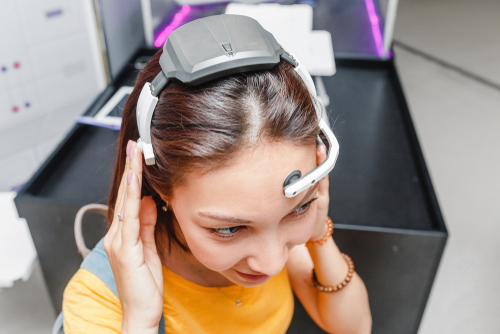 Imagine using your mind to control machines, or your employer reading how you feel in real time from a dashboard? This is the future of BCI technology.
 National Suicide Hotline Designation Act of 2020 (S 2661) – Introduced by Sen. Cory Gardner (R-CO) on Oct. 22, 2019, this bill requires the Federal Communications Commission to designate 988 as the universal telephone number for a national suicide prevention and mental health crisis hotline. It also directs the Department of Health and Human Services to provide access to competent, specialized services for high-risk populations such as LGBTQ youth; minorities; and people who live in rural areas. The Act was passed in the Senate in May, the House in September, and was signed into law on Oct. 17.
 The Senate Republicans’ slimmed-down stimulus bill recently failed to materialize after receiving less than the 60 votes needed to move forward. The “skinny” stimulus bill, with a price tag of only $650 billion, was intended to be a way to quickly inject stimulus into the economy and bypass both the multi-trillion-dollar Republican HEALS Act and the Democratic HEROES Act.
 With winter around the corner and the threat of seasonal viruses looming, a second wave of COVID-19 poses a real threat to our health and business operations, according to Johns Hopkins Medicine.
 Looking back to 2012, the Federal Open Market Committee (FOMC) – a collaboration of the 12 regional Fed banks and the Federal Reserve Governors in Washington – came together and published a Statement on Longer-Run Goals and Monetary Policy Strategy.
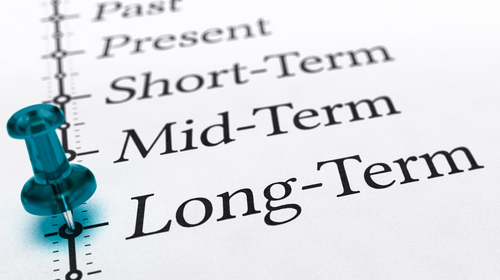 As bad as the economy is right now due to the COVID outbreak in the United States, many economists are predicting that the long-term outlook is much bleaker. Alas, Congress and the Federal Reserve’s efforts at stimulus and interest rate management have done much to keep the economy and stock market afloat. However, small businesses – the backbone of America’s employment growth – are closing every day. As consumer spending reduces further, the impact will likely affect Wall Street. Consequently, share prices may soon begin correcting to reflect the future more so than the present.