

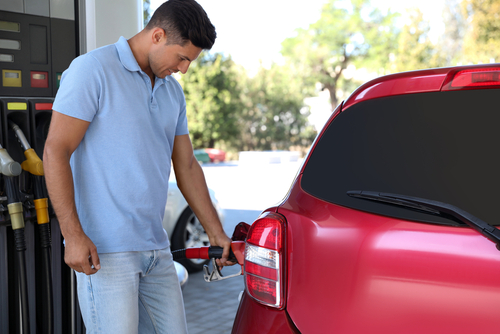
 We’re all feeling the pain at the pump. Unless you decide to walk, bike or take public transportation, you might feel stuck. But all is not lost. Here are some fuel-efficient driving techniques that can help you save hundreds of dollars in fuel each year.
Don’t Drive Too Fast
Of course, when you’re on the highway, you must maintain a certain speed. However, cars, vans and pickups are typically the most fuel-efficient when driving between 50 and 80 mph. If you go any faster, you’ll use more gas. Consider this: When you’re driving roughly 75 miles per hour, you use 20 percent more fuel than you would if you were going around 60 mph. On a 15-mile trip, if you’re driving faster, you’ll only save two minutes. Only you know if shaving two minutes and gulping extra gas from your tank is worth it.
Maintain a Steady Speed
When you drive in bursts, slowing down and then accelerating, your fuel consumption increases. Specifically, tests have shown that varying your speed up and down between 75 and 85 mph every 18 seconds can bump up fuel usage by 20 percent. If your car has cruise control, use that. Word from the wise: Slow and steady wins the race.
Accelerate Gently
The heavier your foot is when putting the pedal to the metal, the more gas you use. Here’s how to accelerate and save gas: From a stop, take five seconds to get to 12 mph. You’ll speed on up after that, but the point is to pay attention to when you’re just starting and ease into your journey.
Coast to Decelerate
If you tend to have a heavy brake foot, you’re thwarting your forward momentum. Granted, you want to control your car if you’re in rain or snow. But here’s the trick: Look ahead to see what traffic is like and, if you have some room when you’re headed down that hill, take your foot off the gas and the brake, and enjoy the ride – you’ll conserve fuel and save money.
Try Not to Idle
Except when you’re in traffic, if you’re stopped longer than a minute, turn off your engine. The average vehicle with a three-liter engine drinks in over a cup of fuel for every 10 minutes it idles. Ouch!
Measure Tire Pressure
Do this every month. If your tires are under-inflated by 56 kilopascals (aka 8 pounds per square inch), fuel consumption rises by up to 4 percent. If you don’t know the right tire pressure for your car, look on the edge of the driver’s side door. If your tires are low, it also can reduce the life of them. Make it a habit to check your tires.
Use Credit Cards with Gas Rewards
These cards are usually issued in partnership with a bank and offer a discount on gas, like saving five or six cents off a gallon. Yes, mere pennies; but when you add it up, it makes a difference. A few of the top cards to check out are Citi Custom CashSM Card, Blue Cash Preferred® Card from American Express, and Discover it® Cash Back. Here are a few more. Another smart way to save is to get an app like GasBuddy that shows you the cheapest gas near you.
No one knows when gas prices will go down. In the meantime, the only thing you can do is try to work around the situation as best you can. The good news is that nothing lasts forever.
Sources
https://www.nrcan.gc.ca/energy-efficiency/transportation-alternative-fuels/personal-vehicles/fuel-efficient-driving-techniques/21038
https://money.com/people-combatting-high-gas-prices/

 Today, businesses have to grapple with vast amounts of data from different sources, including emails, mailing lists, customer orders, system logs, mobile apps, social media networks, etc. This data is crucial to businesses in various ways. When analyzed, a business can identify operational issues, personalize the customer experience and manage supply chains – all contributing to better decision-making.
 Supreme Court Police Parity Act of 2022 (S 4160) – In response to potential threats and protests outside the homes of Supreme Court judges following a leak of their preliminary judgement on a case related to Roe vs. Wade, this bill authorizes extra security for the justices and their families. Specifically, Supreme Court justices and their families would be provided with security detail similar to that of other top government officials and families in the executive branch (e.g., the president and vice president) and legislative branch (e.g., Speaker of the House and Senate Majority Leader). This type of detail generally cannot be declined. The bill was introduced by Sen. John Cornyn (R-TX) on May 5. It passed in both the Senate and the House on June 14 and was signed into law by the president on June 16.
 COVID-19 impacted the economy dramatically and commercial real estate was no exception in terms of decreased values. Often, the real property could no longer service the debt used to finance it. This debt restructuring and resulting debt forgiveness can result in taxable income.
 The Cash Conversion Cycle, also known as the Net Operating Cycle, answers the question, “How many days does it take a company to pay for and generate cash from the sales of its inventory?” However, before an analysis like this can take place, it’s important to consider the company’s primary line of business.
 With the S&P down nearly 20 percent and the Nasdaq index down nearly 4,000 points since the beginning of 2022, one could say the indices are in a bear market. While we can’t predict the future, economic indicators can offer some insight into the likelihood of the market’s future performance.
 Thanks to the Great Resignation trend over the past year, there is a high availability of jobs. Therefore, now is a good time for retirees who would like to go back to work to ease into the job market. However, if you’ve already begun drawing Social Security benefits, you should understand how earning income will affect those payouts.
 You love summer, don’t you? School’s out and BBQs are on. But what you probably don’t love are those higher air conditioning bills. Here are some tried-and-true ways to help lower the cost of keeping cool.
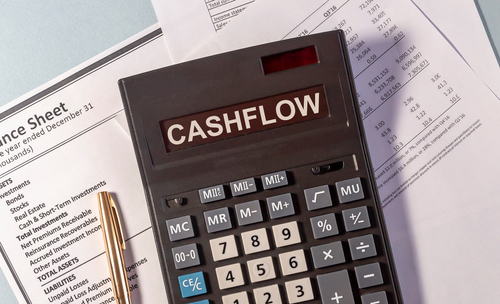 Cash flow awareness is vital in running the day-to-day activities of a business. Keeping track of the inflows and outflows helps a company make better plans and decisions, such as the right time to expand. Cash flow knowledge reveals where a business is spending money and can protect business relations, among other benefits. However, tracking cash flow is a challenge for many businesses.
 To amend the Child Nutrition Act of 1966 to establish waiver authority to address certain emergencies, disasters and supply chain disruptions, and for other purposes. (HR 7791) – In response to the recent nationwide shortage of infant formula, Congress passed a bill authorizing $28 million to fund emergency supplies and to address the potential for future shortages due to emergencies, disasters or supply chain disruptions. The bill was introduced by Rep. Jahana Hayes (D-CT) on May 17. It passed in the House on May 18 and unanimously in the Senate on May 19. It is currently awaiting signature by the president.