

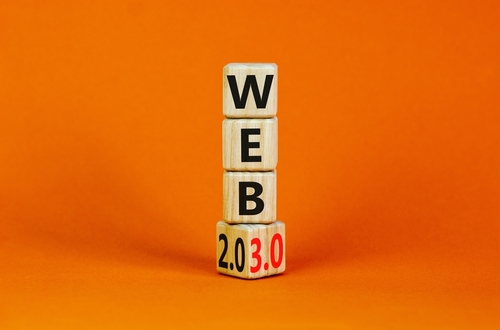
 The internet keeps evolving. It started with static web pages in Web 1.0 before evolving to interactive and dynamic content in Web 2.0. A new phase of technology is now introducing Web 3.0, or the third generation of The World Wide Web. Although it is a work in progress, it is necessary to understand the new concept and how it will impact the future of online interactions.
What is Web 3.0?
Web 3.0 is a term used to describe the next generation of the internet. Industry experts consider it the next big thing in the evolution of the The Web after Web 2.0. Web 2.0 refers to the Internet era characterized by user-generated content, social networking, and interactive web applications; it is known mainly as the Internet of Information.
Web 3.0, on the other hand, is built on top of the existing infrastructure; however, it introduces new technologies that enable computers to interpret data in a more human-centered manner. It combines disruptive technologies such as blockchain, augmented reality, virtual reality, edge computing, IoT, etc. As a result, the internet will become a more intelligent and efficient tool for finding and processing information.
Web 3.0 is also referred to as the semantic web or decentralized web and aims to create a more meaningful online experience by integrating artificial intelligence (AI), decentralized networks, and semantic understanding.
Key Features of Web 3.0
Decentralization
Web 3.0 makes good the move toward decentralization. Decentralization implies that instead of relying on central authorities, data is simultaneously stored in multiple locations. Since Web 3.0 is built on decentralized networks, such as blockchain technology, it creates a more transparent, secure, and trusted web and gives users more control over their data.
Artificial Intelligence and Machine Learning
Web 3.0 will enable computers to comprehend information similar to the way humans do, using semantic web concepts and natural language processing. It also will utilize machine learning – technology that employs data and algorithms to imitate human learning and enhance accuracy. Web 3.0 is designed to leverage the power of artificial intelligence (AI), making web applications more intelligent and enhancing their capacity to make informed decisions. It also helps automate tasks, improve efficiency, and provide more personalized experiences for users.
Ubiquity and Connectivity
The rise of the Internet of Things (IoT) is another contributing factor, enabling information and content to be more connected and ubiquitous. It also means data is accessible via multiple applications and devices.
3D Visualization
Using augmented reality, virtual reality, and mixed reality combined with technologies such as IoT makes it possible to create a spatial web. This helps maintain real-life scale and experience on the web. A good example is the application of VR technology in e-commerce.
Openness and Accessibility
Web 3.0 is built on open standards and protocols, which make it more accessible to both developers and users. This promotes innovation and collaboration across different sectors and communities.
The Impact of Web 3.0 and Challenges
Web 3.0 will significantly change how users interact with information online and transform different aspects of life, including commerce, health, and education, among others. For instance, decentralization gives users greater control over their personal data. This might help limit the collection of data without user consent or compensation.
With blockchain technology as a foundation of Web 3.0, the data becomes immutable, transparent, and hard to hack. This is because all transactions will use self-executing smart contracts.
Web 3.0 will usher in a new era of automation as intelligent systems and algorithms become increasingly integrated into online experiences. This will include more intelligent chatbots, personalized recommendations, sophisticated predictive analytics, and autonomous systems.
As a result, there will be an improved user experience. Users will have a more personalized and interactive experience online, with applications that can better understand their needs and preferences.
Despite the impressive positive impact, Web 3.0 is still in its early emerging stage and is not without challenges. As more significant work and effort are being put toward its actualization, several issues must be addressed. First, to facilitate specific user functions, additional layers must be built on top of the blockchain to ease its complex operations.
Secondly, decentralization introduces data governance and regulation concerns. With no central control of data, bad actors can take advantage to promote hate speech, misinformation and cybercrime.
Thirdly, this new iteration of the internet also requires implementing new technologies and using advanced devices.
Conclusion
The evolution of the internet is inevitable. Although more effort is still required to realize the full potential of Web 3.0, business leaders should be aware of new developments to ensure they can take advantage of opportunities presented by the spatial web and venture into new avenues to remain competitive.

 Relating to a national emergency declared by the President on March 13, 2020 (HJ Res 7) – On March 13, 2020, then-President Trump declared a national emergency relating to the COVID-19 pandemic. Since then, emergency status has continued until the passage of this resolution. The national emergency status relaxed many healthcare rules, such as training mandates for nursing home aides, easier access to certain prescribed medications (e.g., Adderall, Ritalin, oxycodone, buprenorphine), and utilization of uncredentialed nurse practitioners and physician assistants for hospitalized Medicare patients. The resolution to end emergency status passed in the House on Feb. 1 and Senate on March 29. The resolution was introduced by Rep. Paul Gosar (R-AZ) on Jan. 9 and enacted by President Biden on April 10.
 Most people volunteer out of a sense of altruism, duty or purpose – not to get a tax deduction from Uncle Sam. At the same time, if your good deeds could also result in lower taxes, why not? Theoretically, this would free up more time to volunteer or let you make a charitable donation, a win-win for you and the cause you care about.
 When it comes to valuing a business, there are many ways to examine a company’s profitability. Looking at a business’ liquidation value and its breakup value are two of many approaches to see how a company is functioning and how it might run under different management and economic environments.
 The Roth IRA is a retirement savings account in which you invest only after-tax dollars. Subsequently, all earnings grow tax-free and may be withdrawn tax-free. However, there are limits to who can contribute and how much they can contribute to a Roth IRA.
 It’s that time of year again: tax time. And while many of your money-saving options might be limited after Dec. 31, there’s still a lot you can do to help lower your taxes, save money and avoid penalties. Here’s a quick snapshot.
 Emerging technologies, such as artificial intelligence, machine learning, data analytics and biotechnology, greatly transform society and reshape the global economy. However, these technologies also come with a significant challenge regarding ethical and social implications. Global collaboration by governments, regulators and industry leaders can help ensure that emerging technologies are developed and deployed responsibly.
 COVID-19 Origin Act of 2023 (S 619) – This bill would authorize the Office of the Director of National Intelligence (ODNI) to declassify all information relating to the origin of COVID-19 and any correlation with the Wuhan Institute of Virology. The ODNI would be required to redact the report as necessary to protect sources and methods, and then submit it to Congress. The bill was introduced on March 1 by Sen. Josh Hawley (R-MO). It passed the Senate on the same day and the House on March 10. It is currently awaiting signature by the president.
 The U.S. housing market has been extremely volatile over the past year. Year-over-year growth rates were at highs of 20.1 percent in April 2022, then declined to only 8.6 percent in November – the biggest drop in over 20 years. As a result, many homeowners who sold their homes in 2022 or plan to in 2023 may have either gains or losses depending on their location and timing. Below, we tackle the issues you need to know to properly account for the taxation of your home sale.
 The Setting Every Community Up for Retirement Enhancement 2.0 Act of 2022, otherwise known as SECURE 2.0, is a piece of legislation that focuses on how employers and their employees are able to save for retirement and how it impacts their bottom lines.